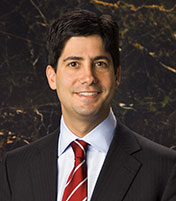
Warsh's Tightrope Walk: Fed Hawk vs. Trump's Economic Vision
The prospect of Kevin Warsh assuming the helm of the Federal Reserve is more than just a personnel change; it represents a potential seismic shift in U.S. monetary policy and a high-stakes test of the central bank's independence. As whispers of a potential
warsh nomination fed chairman intensify, the financial world braces for a clash of philosophies: Warsh, a known inflation hawk committed to monetary discipline, against President Trump's often-stated desire for accelerated economic growth, even if it means slashing interest rates and deferring inflation concerns. This isn't merely a policy debate; it's a tightrope walk where the nation's economic stability hangs in the balance.
The Stakes: Why a Warsh Nomination to the Fed Matters So Much
The Federal Reserve Chairman holds arguably one of the most powerful economic positions in the world, guiding the nation's money supply and setting the tone for global financial markets. Their primary directive, often referred to as the "dual mandate," is to maintain low inflation while fostering maximum sustainable employment. For Kevin Warsh, this mandate is sacrosanct, and he has been a vocal critic of what he perceives as the Fed straying from its core mission in recent decades.
A potential
warsh nomination fed chairmanship immediately sent ripples through global markets. Upon initial speculation, assets traditionally seen as hedges against inflation or beneficiaries of loose monetary policy – such as gold, silver, and even cryptocurrencies like Bitcoin – experienced sharp sell-offs. This dramatic market repricing reflects an expectation that a Warsh-led Fed would usher in an era of greater monetary discipline. Investors anticipate potentially higher interest rates, a stronger U.S. dollar, and a more cautious approach to quantitative easing, which could challenge asset valuations inflated by years of cheap money. His appointment signals a belief that the long-term health of the economy depends on a return to fiscal prudence, even if the short-term medicine tastes bitter for some sectors. For a deeper dive into these market reactions, see
Warsh's Fed Nomination: How Monetary Discipline Hit Gold & Bitcoin.
A Battle-Tested Figure: Warsh's Journey from Wall Street to the Fed's Helm
Kevin Warsh is no stranger to the inner workings of financial markets or the halls of power. His career path uniquely positions him for the challenges of leading the Fed. Before his tenure as a Fed Governor, Warsh honed his skills as an investment banker at Morgan Stanley, gaining invaluable real-world insight into the intricate mechanisms of the financial sector. This practical experience would prove crucial during one of the most turbulent periods in modern economic history.
Appointed as a Fed Governor in 2006, Warsh found himself on the front lines when the 2008 financial crisis threatened to unravel the global banking system. Working alongside giants like then-Treasury Secretary Hank Paulson, New York Fed chief Tim Geithner, and Fed Chair Ben Bernanke, Warsh was instrumental in navigating the economy away from a potential 1930s-style collapse. Their collective actions, including unprecedented interventions like flooding the system with cheap money, were critical in stabilizing the financial markets and preventing Armageddon. This period undoubtedly forged his understanding of systemic risk and the immense power (and potential pitfalls) of central bank intervention. His involvement in these high-stakes decisions offers a unique perspective on managing crises, but also on the aftermath and the long-term consequences of emergency measures.
The Cassandra Complex: Warsh's Prescient Warnings on Inflation and Fed Overreach
While Warsh played a vital role in the crisis response, his perspective evolved significantly in the aftermath. As the immediate danger receded, he became a "Cassandra," sounding alarms about the very policies that had saved the economy from implosion. He argued that quantitative easing and persistently low-interest rates, while necessary during a crisis, were now setting the stage for runaway inflation.
After departing the Fed and moving to Stanford University as an academic, Warsh became a prolific critic. He publicly challenged the ongoing policies of successive Fed chairs – Bernanke, Janet Yellen, and Jerome Powell – accusing them of continuing to "juice the economy" through excessive money printing and driving down longer-term interest rates. His concern wasn't just about the quantity of money, but also the Fed's expanding mandate. Warsh vehemently criticized the central bank's foray into broader policy pursuits, including advocating for "lefty social issues" like Diversity, Equity, and Inclusion (DEI) hiring practices and Environmental, Social, and Governance (ESG) investing. In his view, these initiatives were not only inappropriate for a central bank but also diverted the Fed's focus from its primary mission of controlling inflation and maintaining financial stability.
Warsh's prognostications proved chillingly accurate. By the early 2020s, with Powell still in charge, inflation surged to an alarming 9%, confirming Warsh's long-held fears. This period highlighted the "noxious tax" that inflation imposes on ordinary citizens and reinforced his conviction that the Fed had lost sight of its core responsibilities. This steadfast commitment to a narrow, disciplined interpretation of the Fed's mandate is a cornerstone of his economic philosophy and suggests a potentially radical departure from recent Fed practices if he were to take the chair. To learn more about his foresight, explore
Warsh: The Fed Critic Who Foresaw Runaway Inflation.
Navigating the Political Minefield: Warsh, Trump, and the Future of Monetary Policy
The central tension surrounding a
warsh nomination fed chairmanship lies in reconciling his hawkish, inflation-averse stance with President Trump's economic vision. Trump has consistently championed aggressive economic growth, often suggesting that interest rates should be kept low, even at zero, to stimulate the economy. He has also shown a willingness to "jawbone" Fed chairs, publicly pressuring them to align with his growth agenda.
This creates a fascinating dilemma. On one hand, Warsh's reputation for independence and monetary discipline could lend significant credibility to a Trump administration's economic policy, suggesting a serious approach to long-term stability. On the other, his commitment to reining in inflation through potentially higher interest rates could directly conflict with Trump's desire for sustained low rates and rapid growth.
If Warsh were to be confirmed, he would face the monumental task of maintaining the Fed's independence and adhering to its dual mandate, all while navigating intense political pressure. This tightrope walk would require shrewd diplomacy and an unwavering resolve to prioritize economic fundamentals over short-term political expediency. For investors and businesses, a Warsh-led Fed could mean:
- Higher Borrowing Costs: A more hawkish stance could lead to higher benchmark interest rates, increasing the cost of capital for businesses and consumers.
- Stronger Dollar: Monetary tightening often strengthens the U.S. dollar, impacting international trade and corporate earnings for multinational companies.
- Shift in Investment Strategies: Assets that thrived during periods of low rates and ample liquidity might face headwinds, while value-oriented investments or those benefiting from a stronger dollar could become more attractive.
- Increased Market Volatility: The transition to a more disciplined monetary policy, especially if accompanied by political friction, could introduce periods of heightened market volatility.
Preparing for such a shift means re-evaluating debt exposure, hedging currency risks, and scrutinizing investment portfolios for sensitivity to interest rate changes.
In conclusion, a
warsh nomination fed chairman would usher in an era defined by a renewed emphasis on monetary discipline and a stricter interpretation of the Federal Reserve's mandate. While potentially clashing with the immediate desires of a presidential administration focused on aggressive growth, Kevin Warsh's unique background, battle-tested experience, and prescient warnings about inflation position him as a formidable figure ready to tackle the profound economic challenges ahead. His appointment would not only test the resilience of the U.S. economy but also the very independence of its most powerful financial institution. The world will be watching to see if he can successfully walk the precarious line between hawkish principle and political pragmatism.