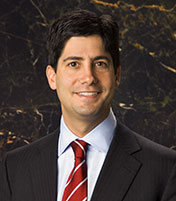
Warsh: The Fed Critic Who Foresaw Runaway Inflation
In the high-stakes world of central banking, few figures command as much attention and respect for their prescience as Kevin Warsh. A former Federal Reserve Governor, Warsh emerged as a critical voice against the Fed's post-2008 policies, accurately foreseeing the inflationary pressures that would eventually grip the global economy. His potential warsh nomination fed as Chair of the Federal Reserve by President Trump signaled a dramatic shift, promising a return to monetary discipline that sent ripples through financial markets.
Warsh’s journey to becoming a prominent inflation hawk is rooted in a unique blend of practical Wall Street experience and high-level government service. Having navigated the treacherous waters of the 2008 financial crisis as a key Fed official, he witnessed firsthand the extraordinary measures required to prevent economic collapse. Yet, it was his post-crisis warnings against the prolonged use of these emergency tools that truly cemented his reputation as a Cassandra-like figure, predicting a future of runaway inflation while many others remained sanguine.
A Hawk on the Horizon: Warsh's Early Warning on Inflation
Kevin Warsh's most significant contribution to economic discourse arguably began after the immediate aftermath of the 2008 financial crisis. As a Fed Governor, he played a crucial role alongside figures like Treasury Secretary Hank Paulson, New York Fed Chief Tim Geithner, and then-Fed Chair Ben Bernanke in orchestrating the massive liquidity injections that saved the banking system from Armageddon. Their actions, though controversial, were widely credited with preventing a 1930s-style economic wipeout by flooding the system with cheap money when it was most desperately needed.
However, Warsh's perspective diverged sharply once the immediate danger subsided. While the Fed, under Bernanke and subsequently Janet Yellen and Jerome Powell, continued to "juice" the economy through quantitative easing (QE) – effectively printing money to buy government bonds and other assets – and keeping interest rates at historic lows, Warsh sounded the alarm. From his new perch as an academic at Stanford University, he began to fire off columns, warning that policies effective in a crisis were now setting the stage for precisely what a central bank is mandated to prevent: runaway inflation.
His criticism wasn't merely academic; it was a deep understanding of monetary policy's lagged effects. Warsh argued that the continuous expansion of the Fed's balance sheet and artificially suppressed interest rates were creating an unsustainable asset bubble and building up a formidable inflationary potential in the economy. He saw the Fed, in his view, acting less as an independent central bank focused on its dual mandate (price stability and maximum sustainable employment) and more as an extension of the White House's economic team, prioritizing growth at any cost. This continued monetary expansion, he warned, would inevitably lead to a situation where inflation would become a "noxious tax" on the savings and purchasing power of everyday Americans.
Indeed, by the Biden years, with Powell still at the helm and continued monetary easing, Warsh's prognostications became an unfortunate reality. Inflation soared, reaching highs of 9% in 2022, confirming his earlier, often solitary, warnings. His foresight underscored a critical lesson: while extraordinary measures are necessary in a crisis, their prolonged use carries significant risks that can undermine economic stability.
Beyond the Mandate: Warsh's Critique of an Overreaching Fed
Beyond his inflation warnings, Kevin Warsh also emerged as a trenchant critic of the Federal Reserve's expanding policy pursuits, arguing that the institution was straying dangerously from its core mandate. He took aim at the central bank's involvement in areas such as Diversity, Equity, and Inclusion (DEI) hiring practices and its support of Environmental, Social, and Governance (ESG) investing. Warsh contended that these "left turns" were not only outside the legal and traditional purview of a central bank but also diverted its focus from its primary responsibilities.
The essence of his argument was that by engaging in social policy and taking on an ever-broader array of issues, the Fed risked losing its critical independence and diluting its focus on price stability and employment. A central bank's power derives from its perceived impartiality and its narrow, technical expertise in managing the money supply. When it starts adjudicating social issues or directing capital based on non-economic criteria, it opens itself up to political pressure and loses credibility in its core function.
Warsh believed that such expanded mandates not only tangled the Fed in contentious political debates but, more importantly, took its "eye off the inflation ball." His concern was not necessarily with the social issues themselves, but with the institutional integrity and effectiveness of the Federal Reserve. A central bank, in his view, must remain fiercely independent and singularly focused on its economic mandates to be truly effective in safeguarding the nation's financial health. When its attention is fragmented across a spectrum of non-monetary issues, its ability to respond decisively and credibly to economic challenges, like rampant inflation, is significantly hampered.
The Formative Years: Crisis Management and Financial Acumen
Before his academic tenure and critical commentary, Kevin Warsh forged his reputation in the crucible of real-world finance and crisis management. His career began in investment banking at Morgan Stanley, where he gained invaluable, practical knowledge of how the financial sector operates and its profound importance to the broader economy. This hands-on experience provided him with a unique perspective, distinguishing him from many career economists who lacked direct exposure to market realities.
It was this blend of market savvy and sharp intellect that made him an indispensable figure during the 2008 financial crisis. As a Federal Reserve Governor, Warsh was at the epicenter of efforts to prevent the US economy from imploding. Working closely with Tim Geithner, then head of the New York Fed (and later Treasury Secretary), Hank Paulson (President George W. Bush's Treasury Secretary), and Fed Chair Ben Bernanke, Warsh played a key role in the coordinated response that saved the banking system. This group famously deployed unprecedented measures, including massive liquidity programs and bailouts, to stabilize a financial system on the brink of collapse.
Warsh's experience in 2008 wasn't just about crisis intervention; it was about understanding the deep interconnections within the financial system and the tools available to stabilize it. This period instilled in him a profound respect for the power of the Fed but also a deep apprehension about the moral hazard and long-term consequences of misusing that power. His involvement in preventing one economic catastrophe undoubtedly informed his subsequent warnings about another: the creeping danger of runaway inflation born from overly accommodative monetary policy.
Market Reaction to a Potential Warsh Nomination
The mere prospect of a warsh nomination fed Chair triggered an immediate and dramatic repricing of risk assets across global financial markets. News of President Trump's consideration of Kevin Warsh as the next Federal Reserve chairman, particularly on January 30, 2026, sent shockwaves that revealed the market's expectation of a fundamental shift towards monetary discipline.
The reaction was swift and decisive:
- Gold Prices Plunge: Gold, often seen as a hedge against inflation and a beneficiary of loose monetary policy, experienced a sharp decline from recent record highs. The expectation of higher interest rates and a stronger dollar under a hawkish Fed Chair diminished its appeal.
- Silver Experiences Sell-off: Silver mirrored gold's trajectory, facing a devastating 31.4% sell-off, indicating a broad-based repricing of precious metals.
- Bitcoin and Cryptocurrencies Face Pressure: Cryptocurrencies, including Bitcoin, which had also thrived in an environment of low interest rates and abundant liquidity, saw significant selling pressure. Traders reassessed the outlook for interest rates, as higher rates increase the opportunity cost of holding non-yielding assets like digital currencies.
This market reaction wasn't just about the personality of Kevin Warsh; it was about the perception of his policy stance. His reputation as an inflation hawk and a proponent of monetary tightening signaled an end to the era of ultra-loose monetary policy that had characterized the preceding years. Investors quickly adjusted their portfolios to prepare for a regime of higher interest rates, a stronger U.S. dollar, and a more disciplined approach to the nation's money supply. For investors, understanding the nuanced signals sent by a potential Fed Chair nomination is crucial, as it often foreshadows significant shifts in monetary policy and asset valuations.
Conclusion
Kevin Warsh stands as a unique and influential voice in the ongoing debate about central bank policy. His journey from an investment banker and crisis manager to a principled critic of the Federal Reserve's post-2008 trajectory highlights a consistent commitment to monetary discipline and a clear focus on the Fed's core mandate. His prescient warnings about runaway inflation, at a time when many dismissed such concerns, ultimately proved accurate, underscoring the dangers of prolonged accommodative policies. The market's dramatic reaction to his potential nomination further attests to the profound impact a hawkish Fed Chair like Warsh could have on global financial stability and asset prices. As economic challenges evolve, Warsh's call for a focused, independent, and disciplined Federal Reserve remains a powerful reminder of the institution's critical role in safeguarding long-term prosperity.